11 min read
The GLP-1 Off-Ramp: Opportunity for Supplement Founders
When consumers stop GLP-1 drugs like Ozempic, rapid weight regain creates a supplement opening. Here's how brand founders can position for the GLP-1 off-ramp.
The flagship adaptogen of the modern stress-and-sleep category.
Standardized ashwagandha extracts (particularly branded KSM-66 and Sensoril) have become the dominant actives in stress, sleep, and cortisol-support formulas. Strong clinical file, recognizable brand extracts, and premium pricing support.
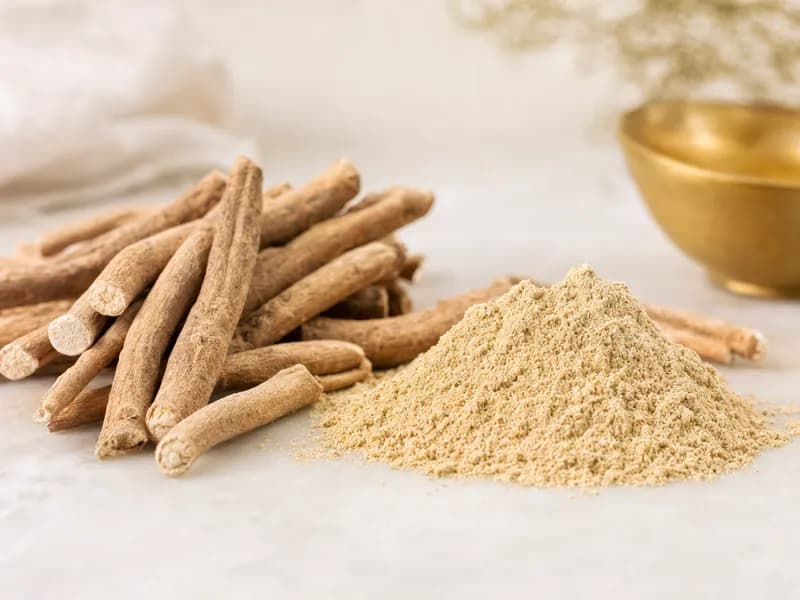
Ashwagandha (Withania somnifera) is an adaptogen with a long traditional-use history and a growing clinical evidence base for stress, cortisol, sleep quality, and athletic performance. The single biggest formulation decision brands face with ashwagandha is extract choice. KSM-66 and Sensoril are the two most recognized branded extracts, each with their own studies and consumer recognition, and they are meaningfully different products from generic root powder.
We help brands pick between generic and branded extracts, structure claims against whichever extract's clinical file they're using, and work through the regulatory differences between Canada (covered by an NPN monograph) and the USA (where some standardized forms have NDI considerations).
Ashwagandha is now the default adaptogen consumers recognize, with KSM-66 and Sensoril commanding premium recognition.
Randomized trials on stress, cortisol, sleep quality, and exercise outcomes give brands defensible claim language.
Stress, sleep, hormonal support, sports recovery, and cognitive. All plausible and evidence-supported positioning angles.
300 to 600 mg standardized extract daily. Morning for energy positioning, evening for sleep.
The published minimums and typical costs for Ashwagandha KSM-66. Every project gets an itemized quote covering your format, ingredients, and packaging.
| Dosage form | Minimum order |
|---|---|
| Ashwagandha KSM-66 capsules | from 2,000 units |
| Ashwagandha KSM-66 tablets | from 2,000 units |
| Ashwagandha KSM-66 gummies | from 3,000 units |
6 to 10 weeks from the catalog (network range 4 to 12 weeks). A custom formula takes 8 to 12 weeks before production.
2,000 units usually lands at USD $8,000 to $15,000 all-in, depending on format, ingredient grade, and packaging.
GMP-certified manufacturing, a third-party ISO 17025 Certificate of Analysis on every batch, regulatory handling, and one account lead.
Formula feasibility reviews are free. Get an itemized quote for your format and volume.
Ashwagandha is monograph-covered for NPN with defined dose and claim ranges.
Sold as a dietary ingredient under DSHEA. Review NDI status for specific standardized forms.
Claim language must be reviewed for your specific product and market before use. Not all claims are permitted in every jurisdiction.
Selected peer-reviewed studies, plus the demand signals we're seeing from brands, retailers, and consumer search behaviour.
Salve J, Pate S, Debnath K, Langade D. · Cureus · 2019
60-day RCT of KSM-66 at 250 mg and 600 mg. Both doses reduced PSS scores and morning cortisol vs placebo. The headline efficacy paper for KSM-66 stress claims.
Lopresti AL, Smith SJ, Malvi H, Kodgule R. · Medicine · 2019
Independent (non-supplier-funded) trial of Shoden ashwagandha showing improvements in stress, cortisol, sleep, and DHEA-S. Important for journalists and skeptics.
Bonilla DA, Moreno Y, Gho C, et al. · Journal of Functional Morphology and Kinesiology · 2021
Pooled trial evidence supporting strength, VO₂max, and recovery benefits. Bridges ashwagandha into sports nutrition positioning.
Chandrasekhar K, Kapoor J, Anishetty S. · Indian Journal of Psychological Medicine · 2012
The original KSM-66 stress trial. Set the dosing and outcome template that most subsequent trials follow.
Ashwagandha has been the #1 botanical launch ingredient in US supplements two years running, with KSM-66 outselling generic root extracts at a roughly 3:1 ratio in DTC.
Ashwagandha hit the cultural moment about three years ago and hasn't faded. Which is unusual for a botanical. The reason is that the underlying problem (stress, sleep, cortisol) hasn't gone anywhere either. Consumers now ask for ashwagandha by name, often by branded extract. KSM-66 dominates US e-commerce listings; Sensoril holds in clinical/healthcare channels; Shoden has emerged as a premium third option. Generic root extract still sells in mass channels at price points 30 to 50% lower, but brand recognition for the branded extracts is strong enough to defend premium SKUs.
References are provided for educational purposes. Citations do not constitute medical claims or guarantee outcomes. Structure-function claim language must be reviewed for your specific product and market.
For Ashwagandha KSM-66 the floors are capsules from 2,000 units, tablets from 2,000 units, gummies from 3,000 units. These are entry minimums. The same formula scales past 100,000 units as it sells.
A white-label or private-label Ashwagandha KSM-66 product from our 800+ formula catalog typically runs 6 to 10 weeks, and 4 to 12 weeks across the full network depending on which facility takes the run. A custom Ashwagandha KSM-66 formula takes 8 to 12 weeks to reach a production-ready formulation, then production on top.
A first run of 2,000 units is usually USD $8,000 to $15,000 all-in, depending on format, ingredient grade, and packaging. That covers formulation work, regulatory, packaging, quality testing, and the production run itself. Coordinated through us a project typically lands 20 to 40% below managing the same production in-house. You get an itemized quote before committing.
Canada: Ashwagandha is monograph-covered for NPN with defined dose and claim ranges. United States: Sold as a dietary ingredient under DSHEA. Review NDI status for specific standardized forms. We prepare and file the NPN application for Canada and handle FDA facility registration and DSHEA label review for the US, including bilingual labels for dual-market SKUs.
300 to 600 mg standardized extract daily. Morning for energy positioning, evening for sleep. We formulate to the dose your claims need and confirm it against the monograph or claim path for your market before the run.
Branded extracts carry licensing fees but ship with clinical studies and marketing collateral you are allowed to cite. If your positioning leans on evidence, that collateral is most of what you are buying. If you are competing on shelf price, a standardized generic extract at the same 300 to 600 mg dose is the rational call.
Ashwagandha is bitter in powder and gummy formats and needs active flavor masking to be palatable. Capsules avoid the problem entirely, which is why they dominate the category.
The positioning decides this, and the same 300 to 600 mg standardized dose covers both. Brands run it in the morning for energy and stress, or in the evening for sleep. Pick one and write the label and marketing around it consistently.
L-theanine or magnesium glycinate. Both are well-established sleep-stack partners, both are easy to source, and both give you additional claim angles beyond the adaptogen story.
Tell us about your product concept and we'll put together a formulation, sourcing, and manufacturing plan tailored to your brand, format, and market.