11 min read
The GLP-1 Off-Ramp: Opportunity for Supplement Founders
When consumers stop GLP-1 drugs like Ozempic, rapid weight regain creates a supplement opening. Here's how brand founders can position for the GLP-1 off-ramp.
The most-studied sports nutrition ingredient is going mainstream.
Creatine monohydrate is the most researched and most affordable form of creatine, with more than a thousand peer-reviewed studies behind it. It's expanding fast out of sports nutrition and into women's health, healthy aging, and cognitive formulas.
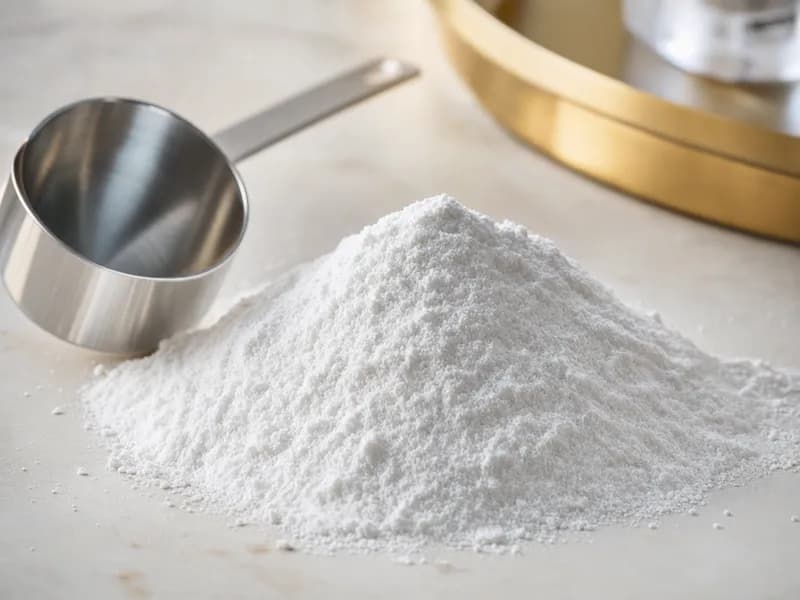
Creatine monohydrate has more than a thousand peer-reviewed studies behind it, which puts it in a pretty small club of ingredients you can actually sell with confident claims. For a long time the market was strength athletes and bodybuilders. In 2025 and 2026 that changed. New research on brain health, sarcopenia, and women's physiology pulled creatine into mainstream wellness, and consumer awareness has followed.
For brands, that combination of strong science, growing awareness, and commodity pricing is unusual. High-purity monohydrate is a known raw material at known prices, and most GMP-certified facilities in our network can run it at low MOQ without drama. The formulation work is mostly about format: creatine is chemically unstable in water, so gummies and RTD drinks need stabilization chemistry that most brands don't have in-house yet.
We help brands pick the format, source the right grade of creatine, and write claims that hold up in Canada (NPN) and the USA (DSHEA).
Over a thousand clinical studies covering performance, recovery, cognitive function, and muscle preservation. Structure-function claims are easy to substantiate.
Creatine monohydrate is one of the most cost-effective actives in the supplement industry. Leaves room for strong brand margins even at accessible retail prices.
Works for sports, beauty-from-within, women's health, healthy aging, and cognitive positioning. One ingredient, multiple target demographics.
3 to 5 g per serving daily. No loading phase required for most consumer applications.
The published minimums and typical costs for Creatine Monohydrate. Every project gets an itemized quote covering your format, ingredients, and packaging.
| Dosage form | Minimum order |
|---|---|
| Creatine Monohydrate powders | from 1,000 units |
| Creatine Monohydrate capsules | from 2,000 units |
| Creatine Monohydrate gummies | from 3,000 units |
6 to 10 weeks from the catalog (network range 4 to 12 weeks). A custom formula takes 8 to 12 weeks before production.
2,000 units usually lands at USD $8,000 to $15,000 all-in, depending on format, ingredient grade, and packaging.
GMP-certified manufacturing, a third-party ISO 17025 Certificate of Analysis on every batch, regulatory handling, and one account lead.
Formula feasibility reviews are free. Get an itemized quote for your format and volume.
Covered by a Health Canada monograph. NPN approval typically straightforward for standard doses and approved claims.
GRAS and widely sold under DSHEA. Structure-function claims are well-established.
Claim language must be reviewed for your specific product and market before use. Not all claims are permitted in every jurisdiction.
Selected peer-reviewed studies, plus the demand signals we're seeing from brands, retailers, and consumer search behaviour.
Kreider RB, Kalman DS, Antonio J, et al. · Journal of the International Society of Sports Nutrition · 2017
The ISSN's flagship position paper. Confirms creatine monohydrate as safe, effective, and the most evidence-backed sports nutrition ingredient available.
Prokopidis K, Giannos P, Triantafyllidis KK, et al. · Nutrition Reviews · 2023
Pooled RCT data showing creatine improves short-term memory and intelligence/reasoning in healthy adults. The basis for most cognitive positioning claims.
Antonio J, Candow DG, Forbes SC, et al. · Journal of the International Society of Sports Nutrition · 2021
Plain-language rebuttal of common creatine concerns (hair loss, kidneys, water retention). Useful for consumer-facing FAQ copy.
Smith-Ryan AE, Cabre HE, Eckerson JM, Candow DG. · Nutrients · 2021
Female-specific review covering performance, pregnancy, post-partum, and menopause. Driving the women's-health crossover marketing.
Creatine is the breakout supplement of 2024 to 2025 with women aged 25 to 44 as the fastest-growing demographic.
Once locked into the male sports nutrition aisle, creatine has crossed into women's wellness, healthy aging, and cognitive supplements. Google search interest for "creatine for women" tripled between 2022 and 2024, and retail data from NielsenIQ shows creatine outpacing collagen for new launches in the protein category. Brands we work with are bundling creatine into beauty and longevity stacks at premium price points, well above the commodity tubs from sports nutrition retailers.
References are provided for educational purposes. Citations do not constitute medical claims or guarantee outcomes. Structure-function claim language must be reviewed for your specific product and market.
For Creatine Monohydrate the floors are powders from 1,000 units, capsules from 2,000 units, gummies from 3,000 units. These are entry minimums. The same formula scales past 100,000 units as it sells.
A white-label or private-label Creatine Monohydrate product from our 800+ formula catalog typically runs 6 to 10 weeks, and 4 to 12 weeks across the full network depending on which facility takes the run. A custom Creatine Monohydrate formula takes 8 to 12 weeks to reach a production-ready formulation, then production on top.
A first run of 2,000 units is usually USD $8,000 to $15,000 all-in, depending on format, ingredient grade, and packaging. That covers formulation work, regulatory, packaging, quality testing, and the production run itself. Coordinated through us a project typically lands 20 to 40% below managing the same production in-house. You get an itemized quote before committing.
Canada: Covered by a Health Canada monograph. NPN approval typically straightforward for standard doses and approved claims. United States: GRAS and widely sold under DSHEA. Structure-function claims are well-established. We prepare and file the NPN application for Canada and handle FDA facility registration and DSHEA label review for the US, including bilingual labels for dual-market SKUs.
3 to 5 g per serving daily. No loading phase required for most consumer applications. We formulate to the dose your claims need and confirm it against the monograph or claim path for your market before the run.
Yes, but plan for it properly. Creatine gummies need careful moisture control and shorter shelf-life planning than a powder or capsule, so we validate the format before committing a run. Powders and capsules remain the lowest-risk formats and the fastest to market.
Monohydrate suits almost every brief. Creatine HCl and buffered forms command higher raw-material prices but carry limited additional evidence over monohydrate, which has more than a thousand peer-reviewed studies behind it. HCl earns its place when the positioning genuinely needs a premium differentiator.
Only with validated stabilization chemistry. Creatine is unstable in water over time, so an RTD without that work degrades before the consumer drinks it. If RTD is central to your concept we will scope the stabilization work up front rather than discover it mid-run.
Carefully. The cognitive evidence is real but still emerging, so it requires tighter substantiation than the muscle-performance claims, which are well established in both markets. We write claim language to what your evidence actually supports and review it against the NPN monograph or DSHEA structure-function path before your labels are printed.
Tell us about your product concept and we'll put together a formulation, sourcing, and manufacturing plan tailored to your brand, format, and market.