11 min read
The GLP-1 Off-Ramp: Opportunity for Supplement Founders
When consumers stop GLP-1 drugs like Ozempic, rapid weight regain creates a supplement opening. Here's how brand founders can position for the GLP-1 off-ramp.
The metabolic active that consumers are calling "nature's Ozempic".
Berberine is an alkaloid from Berberis aristata and goldenseal with a deep clinical file on blood glucose, cholesterol, and metabolic markers. The TikTok comparison to GLP-1 medications oversells it, but the science is strong enough that the category is here to stay.
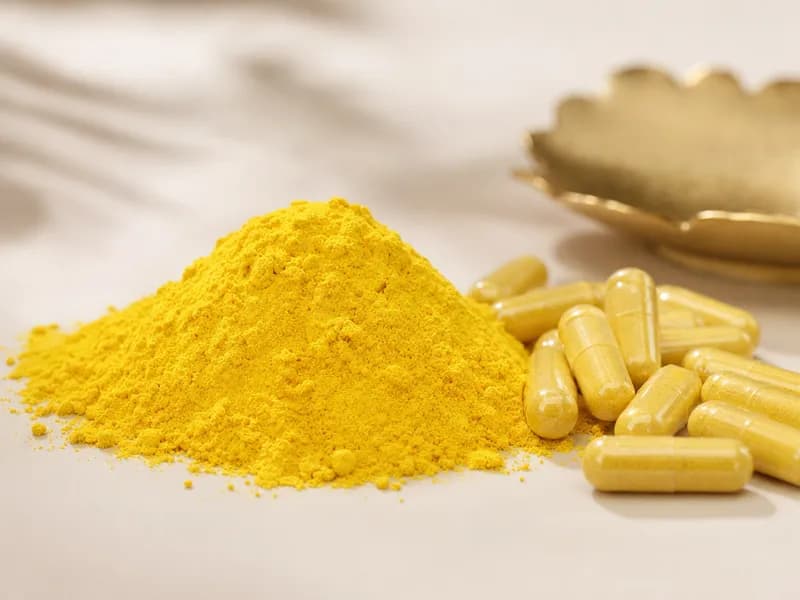
Berberine is an isoquinoline alkaloid sourced from the bark and root of plants in the Berberis family. The mechanism is well-mapped: it activates AMPK, which is the same metabolic switch that metformin works through. That gives berberine an unusual position for a botanical. It has a clinical file comparable to a low-tier prescription drug for glucose and lipid management, with meta-analyses showing reductions in HbA1c, fasting glucose, and LDL cholesterol.
The consumer wave came when TikTok started calling berberine "nature's Ozempic." That label is overblown (berberine is not a weight-loss drug and the GLP-1 comparison doesn't hold mechanistically) but the underlying interest in metabolic health is real, and the formulation briefs we're seeing now reflect that. Brands are either positioning berberine as a standalone metabolic support product or building it into GLP-1 companion stacks alongside inositol, chromium, and soluble fiber.
The formulation reality you have to manage: berberine has poor oral bioavailability (estimated 0.5 to 5%), it's intensely bitter, and at therapeutic doses it can cause GI upset. Splitting the dose across meals (500 mg × 3 daily) is the standard fix for the GI issue. Newer dihydroberberine and phytosome formats raise bioavailability and reduce dose volume, but cost two to four times more per gram. Don't let your CRO ship a single 1,500 mg capsule. That's a customer complaint waiting to happen.
Meta-analyses across glucose, lipids, and HbA1c put berberine closer to pharmaceutical-level evidence than most herbal actives.
Consumers are searching for metabolic support, and berberine sits in that conversation without the disease-claim risk of mimicking a prescription drug.
Pairs cleanly with inositol, chromium, alpha-lipoic acid, or cinnamon for layered metabolic positioning.
1,500 mg/day in three divided doses with meals. Lower doses (500 to 1,000 mg/day) are reasonable for general metabolic positioning; the 1,500 mg dose matches most clinical trial protocols.
The published minimums and typical costs for Berberine HCl. Every project gets an itemized quote covering your format, ingredients, and packaging.
| Dosage form | Minimum order |
|---|---|
| Berberine HCl capsules | from 2,000 units |
| Berberine HCl tablets | from 2,000 units |
| Berberine HCl liquids | from 2,000 units |
6 to 10 weeks from the catalog (network range 4 to 12 weeks). A custom formula takes 8 to 12 weeks before production.
2,000 units usually lands at USD $8,000 to $15,000 all-in, depending on format, ingredient grade, and packaging.
GMP-certified manufacturing, a third-party ISO 17025 Certificate of Analysis on every batch, regulatory handling, and one account lead.
Formula feasibility reviews are free. Get an itemized quote for your format and volume.
Berberine is listed in the NHPID for natural health product use with specific dose and claim ranges. NPN submission is a standard pathway; review the current monograph for permitted claims.
Sold as a dietary ingredient under DSHEA. Avoid any claim language that implies treatment of diabetes, obesity, or that mimics GLP-1 medication outcomes. This is the highest-risk claim area in the category.
Claim language must be reviewed for your specific product and market before use. Not all claims are permitted in every jurisdiction.
Selected peer-reviewed studies, plus the demand signals we're seeing from brands, retailers, and consumer search behaviour.
Lan J, Zhao Y, Dong F, et al. · Journal of Ethnopharmacology · 2015
Pooled data from 27 RCTs showed berberine produced clinically meaningful drops in HbA1c, fasting glucose, and lipids vs placebo. Comparable to first-line oral antidiabetics in some endpoints.
Yin J, Xing H, Ye J. · Metabolism · 2008
Head-to-head trial of berberine vs metformin. Comparable HbA1c and glucose-lowering effects over 3 months at 500 mg three times daily.
Dong H, Zhao Y, Zhao L, Lu F. · Planta Medica · 2013
Berberine reduced total cholesterol, LDL, and triglycerides in pooled RCT data. Foundational for cardiovascular/metabolic dual-positioning.
Feng X, Sureda A, Jafari S, et al. · Theranostics · 2019
AMPK-activation mechanism review. Useful background for technical formulation collateral and claim substantiation files.
"Nature's Ozempic". TikTok views for #berberine crossed 100M in 2023, and search interest stayed elevated through 2024 and into 2025.
Berberine moved from "clinical research alkaloid" to viral consumer ingredient on the back of a single comparison to GLP-1 drugs. That comparison is misleading, but it pulled real consumer interest into a category that was already supported by serious science. The brands that have done well are the ones that took the demand seriously but didn't lean on the Ozempic comparison in their copy. The brands that did lean on it have been getting FTC and FDA scrutiny.
References are provided for educational purposes. Citations do not constitute medical claims or guarantee outcomes. Structure-function claim language must be reviewed for your specific product and market.
For Berberine HCl the floors are capsules from 2,000 units, tablets from 2,000 units, liquids from 2,000 units. These are entry minimums. The same formula scales past 100,000 units as it sells.
A white-label or private-label Berberine HCl product from our 800+ formula catalog typically runs 6 to 10 weeks, and 4 to 12 weeks across the full network depending on which facility takes the run. A custom Berberine HCl formula takes 8 to 12 weeks to reach a production-ready formulation, then production on top.
A first run of 2,000 units is usually USD $8,000 to $15,000 all-in, depending on format, ingredient grade, and packaging. That covers formulation work, regulatory, packaging, quality testing, and the production run itself. Coordinated through us a project typically lands 20 to 40% below managing the same production in-house. You get an itemized quote before committing.
Canada: Berberine is listed in the NHPID for natural health product use with specific dose and claim ranges. NPN submission is a standard pathway; review the current monograph for permitted claims. United States: Sold as a dietary ingredient under DSHEA. Avoid any claim language that implies treatment of diabetes, obesity, or that mimics GLP-1 medication outcomes. This is the highest-risk claim area in the category. We prepare and file the NPN application for Canada and handle FDA facility registration and DSHEA label review for the US, including bilingual labels for dual-market SKUs.
1,500 mg/day in three divided doses with meals. Lower doses (500 to 1,000 mg/day) are reasonable for general metabolic positioning; the 1,500 mg dose matches most clinical trial protocols. We formulate to the dose your claims need and confirm it against the monograph or claim path for your market before the run.
Because a single large dose causes GI upset. The clinical protocol is 500 mg three times daily with meals, totalling 1,500 mg per day. Single-dose 1,500 mg capsules exist and they produce exactly the cramping and constipation that drive returns.
Berberine is bitter and bright yellow, so gummies, transparent capsules, and ready-to-drink formats all need aggressive masking and color management. Capsules and tablets are the practical formats.
Both offer roughly 5 to 10 times the bioavailability at a higher per-gram cost, which lets you cut the dose and the pill count. In a mass-tier product the economics are much harder to justify.
Berberine inhibits CYP3A4 and may interact with prescription medications including statins, blood thinners, and antidiabetic drugs, and it is not recommended during pregnancy or breastfeeding. Required warning wording varies by jurisdiction, and we handle that as part of the label compliance work.
Tell us about your product concept and we'll put together a formulation, sourcing, and manufacturing plan tailored to your brand, format, and market.