11 min read
The GLP-1 Off-Ramp: Opportunity for Supplement Founders
When consumers stop GLP-1 drugs like Ozempic, rapid weight regain creates a supplement opening. Here's how brand founders can position for the GLP-1 off-ramp.
The mitochondrial active that bridges heart, healthy aging, and statin support.
Coenzyme Q10 is a lipid-soluble compound essential to mitochondrial energy production. Ubiquinol is the reduced (active) form that absorbs better than the older ubiquinone, particularly in adults over 40. Strong evidence in heart failure, statin-related muscle symptoms, and healthy aging positioning.
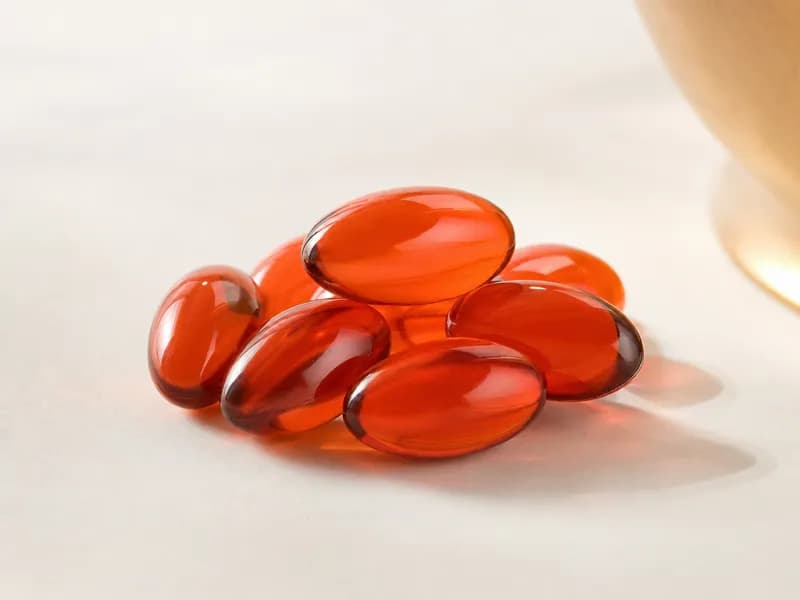
Coenzyme Q10 is one of the foundational mitochondrial nutrients. A lipid-soluble quinone that sits in the electron transport chain and is essential for ATP production. The body makes its own, but endogenous synthesis declines with age (sharply after 40), and statin medications further suppress production. That demographic and pharmacologic setup is what makes CoQ10 a category with durable demand: older adults, statin users, and anyone interested in mitochondrial-health positioning.
The formulation conversation now centers on form. CoQ10 exists in two redox states: ubiquinone (oxidized, the older form) and ubiquinol (reduced, the form actually used in mitochondria). Multiple head-to-head trials show ubiquinol absorbs better than ubiquinone, particularly in adults over 60 and in those with absorption challenges. Ubiquinone costs less per milligram; ubiquinol carries a 2 to 4× raw-material premium but supports better claim language and absorbs at lower per-serving doses. For premium and healthy-aging positioning, ubiquinol is the right call. For mass-channel and budget tiers, ubiquinone with a co-formulated oil base (softgels are still the dominant format) still works.
The two best-evidence positioning angles are statin-associated muscle symptoms (the Q-SYMBIO and follow-on trials remain widely cited) and heart-failure adjunctive support (a recognized clinical use in some European guidelines). Healthy-aging and energy positioning rest on weaker direct outcome evidence but reasonable mechanism plausibility.
Endogenous CoQ10 declines with age. The supplement category grows naturally with the over-50 population, independent of trend cycles.
Roughly 1 in 4 adults over 40 takes a statin. Many cardiologists co-recommend CoQ10 for muscle-symptom support. A meaningful HCP-referral channel.
Q-SYMBIO heart failure trial and the broader mitochondrial-aging literature support credible premium positioning.
Ubiquinol: 100 to 200 mg/day with food. Ubiquinone: 200 to 400 mg/day with food. Higher doses (300 to 600 mg ubiquinol) are used in heart-failure protocols.
The published minimums and typical costs for CoQ10 & Ubiquinol. Every project gets an itemized quote covering your format, ingredients, and packaging.
| Dosage form | Minimum order |
|---|---|
| CoQ10 & Ubiquinol liquids | from 2,000 units |
| CoQ10 & Ubiquinol capsules | from 2,000 units |
| CoQ10 & Ubiquinol chewable tablets | from 2,000 units |
| CoQ10 & Ubiquinol softgels | from 3,000 units |
6 to 10 weeks from the catalog (network range 4 to 12 weeks). A custom formula takes 8 to 12 weeks before production.
2,000 units usually lands at USD $8,000 to $15,000 all-in, depending on format, ingredient grade, and packaging.
GMP-certified manufacturing, a third-party ISO 17025 Certificate of Analysis on every batch, regulatory handling, and one account lead.
Formula feasibility reviews are free. Get an itemized quote for your format and volume.
Ubiquinone and ubiquinol are both covered by Health Canada monographs with defined dose ranges and supported claim language. NPN submission is a standard path.
Both forms are established dietary ingredients under DSHEA. Structure-function claims for cardiovascular and energy support are common. Avoid disease-treatment language regarding heart failure or statin myopathy.
Claim language must be reviewed for your specific product and market before use. Not all claims are permitted in every jurisdiction.
Selected peer-reviewed studies, plus the demand signals we're seeing from brands, retailers, and consumer search behaviour.
Mortensen SA, Rosenfeldt F, Kumar A, et al. · JACC: Heart Failure · 2014
The landmark Q-SYMBIO trial: 300 mg/day CoQ10 reduced cardiovascular events and all-cause mortality in chronic heart failure patients. The most-cited CoQ10 cardiovascular study.
Qu H, Guo M, Chai H, et al. · Journal of the American Heart Association · 2018
Pooled RCT evidence supporting CoQ10 supplementation for statin-related muscle symptoms. The reference for statin co-prescription positioning.
Hernández-Camacho JD, Bernier M, López-Lluch G, Navas P. · Frontiers in Physiology · 2018
Comprehensive review of CoQ10 in healthy aging. Mitochondrial mechanism, age-related decline, and clinical applications.
Failla ML, Chitchumroonchokchai C, Aoki F. · Journal of Functional Foods · 2014
Demonstrated superior absorption of ubiquinol vs ubiquinone in healthy older men. The citation behind ubiquinol's premium positioning.
CoQ10 maintains stable retail sales in the top 10 supplement actives by dollar volume, with ubiquinol formats taking share from ubiquinone year over year.
CoQ10 isn't a viral category, but it has one of the most durable demand profiles in supplements. The buyer is typically a 45-and-older adult, often statin-prescribed, who has been recommended CoQ10 by their cardiologist or pharmacist. That HCP-referral channel makes the category unusually stable through trend cycles. The growth lever now is the form transition: brands launching new SKUs are skipping ubiquinone and going straight to ubiquinol, which both improves their absorption story and supports a 30 to 50% retail price premium.
References are provided for educational purposes. Citations do not constitute medical claims or guarantee outcomes. Structure-function claim language must be reviewed for your specific product and market.
For CoQ10 & Ubiquinol the floors are liquids from 2,000 units, capsules from 2,000 units, chewable tablets from 2,000 units, softgels from 3,000 units. These are entry minimums. The same formula scales past 100,000 units as it sells.
A white-label or private-label CoQ10 & Ubiquinol product from our 800+ formula catalog typically runs 6 to 10 weeks, and 4 to 12 weeks across the full network depending on which facility takes the run. A custom CoQ10 & Ubiquinol formula takes 8 to 12 weeks to reach a production-ready formulation, then production on top.
A first run of 2,000 units is usually USD $8,000 to $15,000 all-in, depending on format, ingredient grade, and packaging. That covers formulation work, regulatory, packaging, quality testing, and the production run itself. Coordinated through us a project typically lands 20 to 40% below managing the same production in-house. You get an itemized quote before committing.
Canada: Ubiquinone and ubiquinol are both covered by Health Canada monographs with defined dose ranges and supported claim language. NPN submission is a standard path. United States: Both forms are established dietary ingredients under DSHEA. Structure-function claims for cardiovascular and energy support are common. Avoid disease-treatment language regarding heart failure or statin myopathy. We prepare and file the NPN application for Canada and handle FDA facility registration and DSHEA label review for the US, including bilingual labels for dual-market SKUs.
Ubiquinol: 100 to 200 mg/day with food. Ubiquinone: 200 to 400 mg/day with food. Higher doses (300 to 600 mg ubiquinol) are used in heart-failure protocols. We formulate to the dose your claims need and confirm it against the monograph or claim path for your market before the run.
Ubiquinol at 100 to 200 mg per day, or ubiquinone at 200 to 400 mg because it absorbs less efficiently. Commercially the more useful distinction is margin: pricing pressure has compressed ubiquinone to commodity tiers, while ubiquinol is where the profitable positioning still lives.
Because it is oxidatively unstable and can revert to ubiquinone during production. If you are paying for ubiquinol you need the production environment specified, or you may ship a product that no longer matches its own label. We specify Kaneka KH or equivalent as the clinical-grade source.
Softgel. CoQ10 is lipid-soluble, so an oil-based softgel outperforms a dry powder capsule on absorption, and consumers are directed to take it with a fat-containing meal either way. Note the bright yellow color stains light packaging and is difficult in clear gel caps.
There is interaction risk with anticoagulants, warfarin in particular, and required warning wording varies by jurisdiction. We handle that in the label compliance review for each market you are selling into.
Tell us about your product concept and we'll put together a formulation, sourcing, and manufacturing plan tailored to your brand, format, and market.