11 min read
The GLP-1 Off-Ramp: Opportunity for Supplement Founders
When consumers stop GLP-1 drugs like Ozempic, rapid weight regain creates a supplement opening. Here's how brand founders can position for the GLP-1 off-ramp.
The heart, brain, and joint ingredient with the deepest clinical file.
EPA and DHA from marine sources are still the default omega-3 ingredients, with one of the deepest clinical files in the supplement industry. Brands differentiate on sourcing, concentration, and freshness more than on the ingredient itself.
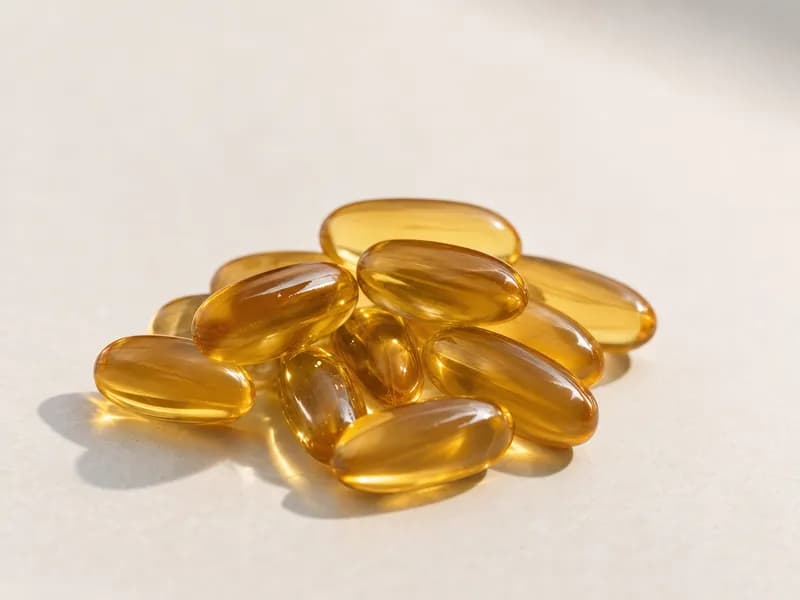
EPA and DHA from fish oil, krill, or algae sit behind some of the most clinically validated supplement claims in the world. Consumer trust is high, but the category is mature, which means you can't win with just "we have omega-3." The levers brands actually pull are concentration (standard 30/20 vs high-concentrate 70%+), source story (wild-caught, sustainability certifications, traceability), freshness specs (peroxide value, TOTOX), and format upgrades like enteric coating or algae sourcing for vegan positioning.
Omega-3 is a category that keeps rewarding brands who pick a specific positioning angle instead of trying to be the omega-3 for everyone. Cardiovascular for older consumers, brain and eye for children and cognitive wellness, prenatal. Each one is a different product. We coordinate sourcing from audited facilities that give you full heavy-metal and oxidation testing, which matters a lot more in this category than most brands expect.
Heart, brain, and joint positioning are some of the most durable demand drivers in the supplement industry. This category doesn't have a trend cycle to worry about.
Wild-caught, sustainable, algae-based, or re-esterified. Each sourcing story supports a different premium position.
EPA/DHA have some of the deepest clinical files available. Claim substantiation is straightforward.
1000 to 2000 mg combined EPA + DHA per serving. Higher for targeted cardiovascular formulas.
The published minimums and typical costs for Omega-3 EPA/DHA. Every project gets an itemized quote covering your format, ingredients, and packaging.
| Dosage form | Minimum order |
|---|---|
| Omega-3 EPA/DHA liquids | from 2,000 units |
| Omega-3 EPA/DHA softgels | from 3,000 units |
| Omega-3 EPA/DHA gummies | from 3,000 units |
6 to 10 weeks from the catalog (network range 4 to 12 weeks). A custom formula takes 8 to 12 weeks before production.
2,000 units usually lands at USD $8,000 to $15,000 all-in, depending on format, ingredient grade, and packaging.
GMP-certified manufacturing, a third-party ISO 17025 Certificate of Analysis on every batch, regulatory handling, and one account lead.
Formula feasibility reviews are free. Get an itemized quote for your format and volume.
Monograph-covered with standard NPN pathway. Cardiovascular and triglyceride claims require specific dose thresholds.
Established DSHEA ingredient with structure-function claim guidance and an FDA qualified health claim for EPA/DHA.
Claim language must be reviewed for your specific product and market before use. Not all claims are permitted in every jurisdiction.
Selected peer-reviewed studies, plus the demand signals we're seeing from brands, retailers, and consumer search behaviour.
Manson JE, Cook NR, Lee IM, et al. · New England Journal of Medicine · 2019
Largest n-3 cardiovascular RCT (n=25,871). Showed reduction in MI risk but not the composite endpoint. Underpins current FDA qualified health claim language.
Hu Y, Hu FB, Manson JE. · Journal of the American Heart Association · 2019
Pooled data from 13 trials (n=127,477) showing reductions in MI, CHD death, and total CHD. The reference paper for cardiovascular claim substantiation.
Bhatt DL, Steg PG, Miller M, et al. · New England Journal of Medicine · 2019
High-dose purified EPA reduced cardiovascular events by 25% in statin-treated patients. Drug study, but it elevated the premium-EPA market positioning.
Calder PC. · Biochemical Society Transactions · 2017
The canonical mechanism review explaining how EPA/DHA modulate inflammation through resolvins and protectins.
Omega-3 retail sales held steady through 2023 to 2024 with growth shifting toward high-concentrate (70%+) and vegan algae formats.
Standard 30/20 fish oil softgels have plateaued. The growth is in high-concentrate liquid omega-3 (often paired with a heritage or sustainability sourcing story), algae-based EPA/DHA for vegan and women's health positioning, and re-esterified triglyceride forms for premium absorption claims. Brands we work with rarely launch a generic omega-3 anymore. It's almost always a high-concentrate or category-specific (prenatal, joint, brain) formulation.
References are provided for educational purposes. Citations do not constitute medical claims or guarantee outcomes. Structure-function claim language must be reviewed for your specific product and market.
For Omega-3 EPA/DHA the floors are liquids from 2,000 units, softgels from 3,000 units, gummies from 3,000 units. These are entry minimums. The same formula scales past 100,000 units as it sells.
A white-label or private-label Omega-3 EPA/DHA product from our 800+ formula catalog typically runs 6 to 10 weeks, and 4 to 12 weeks across the full network depending on which facility takes the run. A custom Omega-3 EPA/DHA formula takes 8 to 12 weeks to reach a production-ready formulation, then production on top.
A first run of 2,000 units is usually USD $8,000 to $15,000 all-in, depending on format, ingredient grade, and packaging. That covers formulation work, regulatory, packaging, quality testing, and the production run itself. Coordinated through us a project typically lands 20 to 40% below managing the same production in-house. You get an itemized quote before committing.
Canada: Monograph-covered with standard NPN pathway. Cardiovascular and triglyceride claims require specific dose thresholds. United States: Established DSHEA ingredient with structure-function claim guidance and an FDA qualified health claim for EPA/DHA. We prepare and file the NPN application for Canada and handle FDA facility registration and DSHEA label review for the US, including bilingual labels for dual-market SKUs.
1000 to 2000 mg combined EPA + DHA per serving. Higher for targeted cardiovascular formulas. We formulate to the dose your claims need and confirm it against the monograph or claim path for your market before the run.
Enteric coating. It is the standard fix for burp-back and it is the single most common complaint driving returns and bad reviews in this category. It adds cost per softgel and is almost always worth it.
Algae-based EPA/DHA enables genuine vegan positioning at a premium price point. The raw material costs meaningfully more than fish oil, so model the margin before committing the run.
TOTOX below 26, tested on every lot. Oxidation is the number one quality differentiator in omega-3, and rancid oil is what turns a repeat customer into a refund. We write oxidation testing into the purchase specification rather than trusting a supplier default.
1,000 to 2,000 mg combined EPA and DHA per serving for general wellness, and up to 3,000 mg per day for targeted cardiovascular formulas. The dose drives softgel count per serving, so it is worth settling early.
Tell us about your product concept and we'll put together a formulation, sourcing, and manufacturing plan tailored to your brand, format, and market.