11 min read
The GLP-1 Off-Ramp: Opportunity for Supplement Founders
When consumers stop GLP-1 drugs like Ozempic, rapid weight regain creates a supplement opening. Here's how brand founders can position for the GLP-1 off-ramp.
The world's most expensive spice with clinical data rivaling first-line antidepressants.
Standardized saffron extracts (particularly Affron® and Satiereal®) have RCT evidence for depression, mood, ADHD, and appetite/weight management. Premium pricing, strong differentiation, and head-to-head data against SSRIs make this an unusually defensible botanical position.
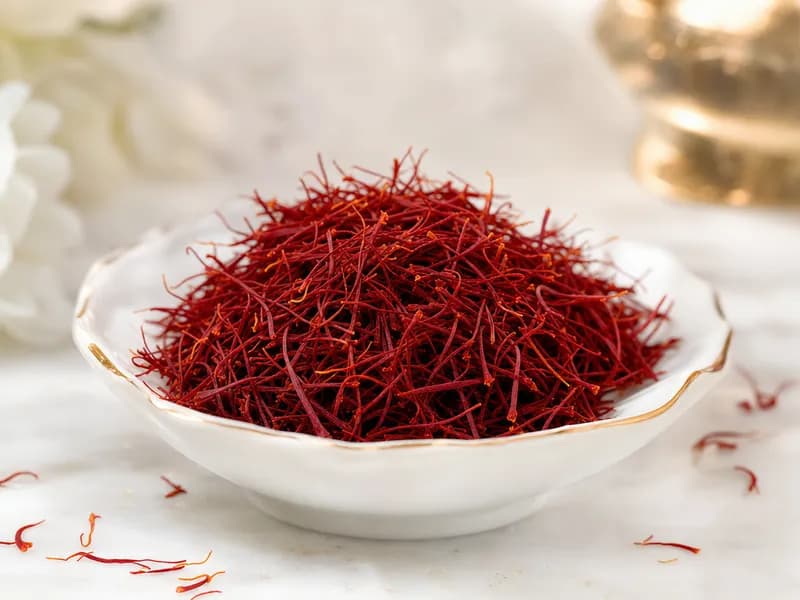
Saffron (Crocus sativus) is the world's most expensive spice by weight, harvested by hand from the stigmas of crocus flowers. The supplement-grade extracts that have built the modern category are concentrated and standardized to the active compounds safranal, crocin, and crocetin. The two branded extracts that dominate the clinical and consumer market are Affron® (Pharmactive Biotech, 28 mg standardized to ≥3.5% Lepticrosalides®) and Satiereal® (PharmaFood/Nexira, 176.5 mg standardized for satiety positioning).
The clinical evidence base is exceptional for a botanical. Multiple RCTs and meta-analyses show saffron extracts producing antidepressant effects comparable to fluoxetine and imipramine in mild-to-moderate depression. There's strong RCT data in pediatric and adult ADHD with saffron matching methylphenidate in small head-to-head trials. Appetite and weight-management trials with Satiereal show modest but consistent reductions in snacking and caloric intake. The breadth and quality of the human data is rare for a botanical at this scale.
For brands, saffron occupies an unusual position: premium-priced raw material (often $3,000 to $6,000/kg for clinical-grade extract vs $100 to $300/kg for generic herbal extracts), strong clinical differentiation, and a consumer narrative that doesn't depend on viral moments. The brands winning here are clinical-credibility plays. Practitioner-recommended mood support, premium DTC wellness, and stress-and-mood positioning. Mass retail and budget tiers don't work because the unit economics don't allow effective dosing.
Multiple RCTs match saffron to fluoxetine and imipramine in mild-to-moderate depression. No other herbal mood active has this depth of head-to-head pharmaceutical data.
Mood, ADHD, appetite, eye health, and even premenstrual symptom support. One branded extract anchors multiple SKUs.
Saffron's price point and clinical credibility support DTC subscriptions and clinical-channel pricing well above commodity herbal tiers.
Mood/depression positioning (Affron): 28 mg/day. Appetite/weight positioning (Satiereal): 176.5 mg/day in 2 divided doses. ADHD and pediatric protocols use 20 to 30 mg/day under clinical supervision.
The published minimums and typical costs for Saffron Extract. Every project gets an itemized quote covering your format, ingredients, and packaging.
| Dosage form | Minimum order |
|---|---|
| Saffron Extract capsules | from 2,000 units |
| Saffron Extract tablets | from 2,000 units |
| Saffron Extract softgels | from 3,000 units |
6 to 10 weeks from the catalog (network range 4 to 12 weeks). A custom formula takes 8 to 12 weeks before production.
2,000 units usually lands at USD $8,000 to $15,000 all-in, depending on format, ingredient grade, and packaging.
GMP-certified manufacturing, a third-party ISO 17025 Certificate of Analysis on every batch, regulatory handling, and one account lead.
Formula feasibility reviews are free. Get an itemized quote for your format and volume.
Saffron extracts are recognized under the NHPID for natural health product use. Specific claim language depends on the monograph and the standardized extract being used. NPN submission is a standard pathway with documentation requirements around standardization and adulteration testing.
Sold as a dietary ingredient under DSHEA. Structure-function claims around mood and emotional well-being are common. Avoid disease-treatment language ("treats depression," "replaces antidepressants"). This is the highest-risk claim area for the ingredient.
Claim language must be reviewed for your specific product and market before use. Not all claims are permitted in every jurisdiction.
Selected peer-reviewed studies, plus the demand signals we're seeing from brands, retailers, and consumer search behaviour.
Lopresti AL, Drummond PD. · Human Psychopharmacology · 2014
Pooled clinical evidence reviewing saffron's antidepressant effects, including head-to-head trials vs fluoxetine and imipramine. The reference document for mood-positioning substantiation.
Hausenblas HA, Saha D, Dubyak PJ, Anton SD. · Journal of Integrative Medicine · 2013
Independent pooled analysis confirming saffron's effects on major depressive disorder. Adds credibility to the antidepressant-comparable positioning.
Akhondzadeh S, Tahmacebi-Pour N, Noorbala AA, et al. · Phytotherapy Research · 2005
The original Iranian saffron-depression RCT that opened the clinical research line. 30 mg/day for 6 weeks produced clinically significant improvements vs placebo.
Baziar S, Aqamolaei A, Khadem E, et al. · Journal of Child and Adolescent Psychopharmacology · 2019
Saffron extract matched methylphenidate for ADHD symptom improvement in children. The citation behind premium pediatric-mood positioning, used carefully.
Saffron supplement launches grew over 80% from 2022 to 2024 in DTC and clinical channels, driven by mood, ADHD, and natural-alternatives-to-SSRIs positioning.
Saffron sits in an interesting position: the clinical data is exceptional, but consumer awareness is still building outside of integrative-medicine circles. The brands winning here have been clinical-credibility plays. Affron-licensed mood products from companies like Pure Encapsulations and physician-targeted DTC startups. The largest growth signal in 2024 to 2025 is in the "natural alternative" mood space, particularly among consumers reluctant to start SSRIs but interested in evidence-based mood support. ADHD support is the second growth angle, particularly for parents seeking adjuncts or alternatives to stimulant medications for children. Both positioning angles require careful claim-language engineering to stay compliant.
References are provided for educational purposes. Citations do not constitute medical claims or guarantee outcomes. Structure-function claim language must be reviewed for your specific product and market.
For Saffron Extract the floors are capsules from 2,000 units, tablets from 2,000 units, softgels from 3,000 units. These are entry minimums. The same formula scales past 100,000 units as it sells.
A white-label or private-label Saffron Extract product from our 800+ formula catalog typically runs 6 to 10 weeks, and 4 to 12 weeks across the full network depending on which facility takes the run. A custom Saffron Extract formula takes 8 to 12 weeks to reach a production-ready formulation, then production on top.
A first run of 2,000 units is usually USD $8,000 to $15,000 all-in, depending on format, ingredient grade, and packaging. That covers formulation work, regulatory, packaging, quality testing, and the production run itself. Coordinated through us a project typically lands 20 to 40% below managing the same production in-house. You get an itemized quote before committing.
Canada: Saffron extracts are recognized under the NHPID for natural health product use. Specific claim language depends on the monograph and the standardized extract being used. NPN submission is a standard pathway with documentation requirements around standardization and adulteration testing. United States: Sold as a dietary ingredient under DSHEA. Structure-function claims around mood and emotional well-being are common. Avoid disease-treatment language ("treats depression," "replaces antidepressants"). This is the highest-risk claim area for the ingredient. We prepare and file the NPN application for Canada and handle FDA facility registration and DSHEA label review for the US, including bilingual labels for dual-market SKUs.
Mood/depression positioning (Affron): 28 mg/day. Appetite/weight positioning (Satiereal): 176.5 mg/day in 2 divided doses. ADHD and pediatric protocols use 20 to 30 mg/day under clinical supervision. We formulate to the dose your claims need and confirm it against the monograph or claim path for your market before the run.
It depends on the positioning. Affron is dosed at 28 mg per day for mood positioning; Satiereal at 176.5 mg per day in two divided doses with meals for appetite management. They are different products with different doses and different evidence behind them.
Adulteration. Substitution with safflower, marigold, or synthetic dyes is documented in commodity saffron supply, and branded extracts include authenticity testing as part of what you are buying. This is one of the ingredients where we insist on an audited source.
Encapsulation. Saffron is bitter with a strong floral aroma that resists masking, so powders and gummies are difficult. Capsules and tablets are the practical formats.
The head-to-head antidepressant trial data is a marketing strength and a regulatory landmine at the same time, so disease-treatment language has to be avoided completely. Keep doses within trial-supported ranges of 200 mg per day or less, and note the pregnancy contraindication, where required warnings vary by jurisdiction.
Tell us about your product concept and we'll put together a formulation, sourcing, and manufacturing plan tailored to your brand, format, and market.