11 min read
The GLP-1 Off-Ramp: Opportunity for Supplement Founders
When consumers stop GLP-1 drugs like Ozempic, rapid weight regain creates a supplement opening. Here's how brand founders can position for the GLP-1 off-ramp.
The amino acid riding the longevity research wave with a 50-year safety record.
Taurine is a sulfur-containing amino acid abundant in heart, retina, and brain tissue. The 2023 Science paper on taurine deficiency as a driver of aging pulled it into the longevity conversation. Safety profile is excellent, formulation is easy, and the new positioning angles are strong.
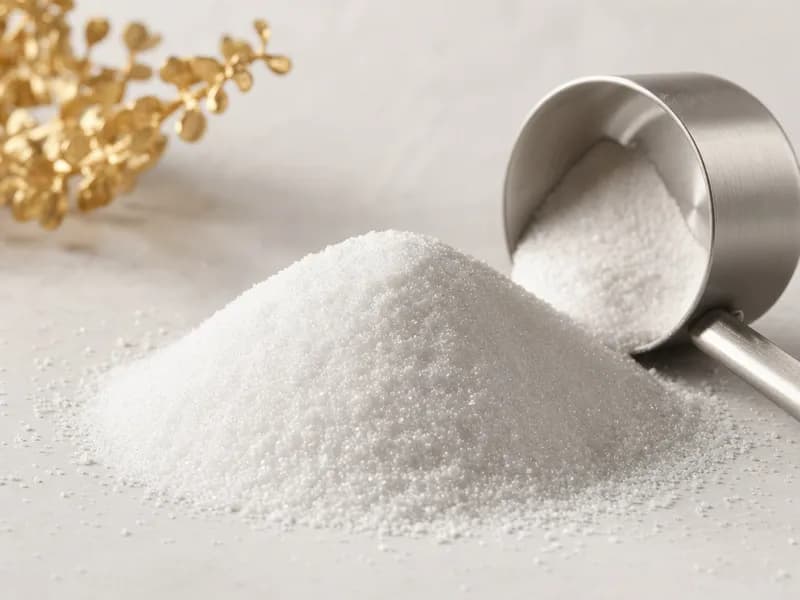
Taurine is an amino acid that the body produces in modest amounts and supplements from animal-source foods. It's been a sports nutrition staple for decades (the active in Red Bull and most energy drinks at 1,000 mg/can), but until recently its supplement positioning was narrow. Endurance, hydration, and a vague "performance" story. That changed in 2023 when Vijay Yadav's group at Columbia published the Science paper showing that taurine levels decline with age, and that taurine supplementation extends healthspan and lifespan in mice and monkeys. The longevity category latched onto it within weeks.
The research isn't just the longevity paper. There's a deep clinical file on cardiovascular outcomes (taurine modulates blood pressure, heart rate variability, and arrhythmia risk), on glycemic control in diabetes, and on liver function. Pooled meta-analyses support modest blood-pressure reductions and exercise-performance benefits. The safety profile is unusually clean. Taurine has GRAS status in the US for beverage use, decades of high-dose human exposure data, and almost no clinical concerns at supplement doses up to 6 g/day.
For formulators, taurine is a dream ingredient: tasteless to mildly sweet, water-soluble, heat-stable, inexpensive, and compatible with almost everything else. The hard part isn't the formulation; it's positioning. Generic "taurine" doesn't sell. It has to be either a longevity stack ingredient, a cardiovascular product, or a positioned energy/recovery component. We're seeing it land in three formats now: 2 to 4 g doses in longevity stacks (often paired with creatine, glycine, or NAD precursors), 500 to 1,000 mg in cardiovascular blends, and 1 to 2 g in clean-energy beverages and pre-workout formulas.
The 2023 Science paper recast taurine from a sports-nutrition niche into a longevity protagonist. Consumer attention has followed.
Decades of clinical use, GRAS status, and no meaningful drug interactions. One of the easier ingredients to get cleared by retailers and regulatory teams.
Longevity, cardiovascular, hydration, recovery, and energy. Taurine works in multiple product lines without reformulation.
1,000 to 3,000 mg/day for general wellness and cardiovascular positioning. 2,000 to 6,000 mg/day in longevity protocols (matching the doses used in the major clinical trials).
The published minimums and typical costs for Taurine. Every project gets an itemized quote covering your format, ingredients, and packaging.
| Dosage form | Minimum order |
|---|---|
| Taurine powders | from 1,000 units |
| Taurine capsules | from 2,000 units |
| Taurine tablets | from 2,000 units |
6 to 10 weeks from the catalog (network range 4 to 12 weeks). A custom formula takes 8 to 12 weeks before production.
2,000 units usually lands at USD $8,000 to $15,000 all-in, depending on format, ingredient grade, and packaging.
GMP-certified manufacturing, a third-party ISO 17025 Certificate of Analysis on every batch, regulatory handling, and one account lead.
Formula feasibility reviews are free. Get an itemized quote for your format and volume.
Taurine is listed in the NHPID for natural health product use, with monograph-defined dose ranges and supported claim language for cardiovascular and energy positioning.
GRAS status for beverage use; established dietary ingredient under DSHEA. Structure-function claims for cardiovascular, energy, and recovery are well-trodden.
Claim language must be reviewed for your specific product and market before use. Not all claims are permitted in every jurisdiction.
Selected peer-reviewed studies, plus the demand signals we're seeing from brands, retailers, and consumer search behaviour.
Singh P, Gollapalli K, Mangiola S, et al. · Science · 2023
Yadav group's landmark paper: taurine levels decline with age across species, and supplementation extended healthspan and lifespan in mice and rhesus monkeys. The catalyst behind the longevity-category interest.
Guan L, Miao P. · European Journal of Pharmacology · 2020
Pooled RCT evidence supporting modest blood pressure and lipid improvements with taurine supplementation. Anchors the cardiovascular positioning.
Waldron M, Patterson SD, Tallent J, Jeffries O. · Sports Medicine · 2018
Pooled exercise-trial data showing improvements in endurance, recovery, and time-to-exhaustion. The reference document for sport/recovery positioning.
Schaffer S, Kim HW. · Biomolecules & Therapeutics · 2018
Mechanism review covering taurine's roles in osmoregulation, calcium signaling, mitochondrial function, and antioxidant defense.
Taurine search interest jumped over 200% in the 60 days following the June 2023 Science publication, then settled at a new sustained baseline 50 to 70% above pre-paper levels.
Taurine is a clear example of a single research paper reshaping a supplement category. Before June 2023, taurine sold as a sports-nutrition active in the shadow of creatine and BCAAs. The Science paper, picked up by every major health-tech and longevity newsletter, repositioned it as a longevity ingredient. The brands that moved first. Bryan Johnson's Blueprint included taurine in his "Don't Die" protocol; Momentous and Thorne added it to longevity stacks. Captured the initial attention. The opportunity now is in cardiovascular and metabolic-positioning angles, which sit on older but stronger clinical data than the longevity claims.
References are provided for educational purposes. Citations do not constitute medical claims or guarantee outcomes. Structure-function claim language must be reviewed for your specific product and market.
For Taurine the floors are powders from 1,000 units, capsules from 2,000 units, tablets from 2,000 units. These are entry minimums. The same formula scales past 100,000 units as it sells.
A white-label or private-label Taurine product from our 800+ formula catalog typically runs 6 to 10 weeks, and 4 to 12 weeks across the full network depending on which facility takes the run. A custom Taurine formula takes 8 to 12 weeks to reach a production-ready formulation, then production on top.
A first run of 2,000 units is usually USD $8,000 to $15,000 all-in, depending on format, ingredient grade, and packaging. That covers formulation work, regulatory, packaging, quality testing, and the production run itself. Coordinated through us a project typically lands 20 to 40% below managing the same production in-house. You get an itemized quote before committing.
Canada: Taurine is listed in the NHPID for natural health product use, with monograph-defined dose ranges and supported claim language for cardiovascular and energy positioning. United States: GRAS status for beverage use; established dietary ingredient under DSHEA. Structure-function claims for cardiovascular, energy, and recovery are well-trodden. We prepare and file the NPN application for Canada and handle FDA facility registration and DSHEA label review for the US, including bilingual labels for dual-market SKUs.
1,000 to 3,000 mg/day for general wellness and cardiovascular positioning. 2,000 to 6,000 mg/day in longevity protocols (matching the doses used in the major clinical trials). We formulate to the dose your claims need and confirm it against the monograph or claim path for your market before the run.
500 to 1,000 mg for cardiovascular and hydration products, 1 to 2 g for recovery and energy, and 2 to 4 g for longevity stacks. The longevity protocols in the clinical literature run higher still, at 2 to 6 g per day.
Yes. It is heat-stable up to typical processing temperatures and water-soluble, so it formulates cleanly into beverages, gummies, and bars as well as powders and capsules. It is also mildly sweet and effectively tasteless in capsule form.
No, and it is worth saying so in your product copy. Some retailers and platforms still flag taurine for vague stimulant associations because of its use in energy drinks. Clarifying this up front prevents both consumer confusion and listing friction.
Taurine has excellent bulk-cost economics and is one of the lowest-cost amino acids on a gram-for-effect basis, which is what makes the higher longevity doses commercially viable at consumer price points.
Tell us about your product concept and we'll put together a formulation, sourcing, and manufacturing plan tailored to your brand, format, and market.