11 min read
The GLP-1 Off-Ramp: Opportunity for Supplement Founders
When consumers stop GLP-1 drugs like Ozempic, rapid weight regain creates a supplement opening. Here's how brand founders can position for the GLP-1 off-ramp.
The chamomile flavonoid behind the Huberman-era sleep stack.
Apigenin is a flavonoid found in chamomile, parsley, and celery that has become a fixture of the modern sleep stack. The human RCT base is thinner than for magnesium or L-theanine, but the consumer pull is real and the mechanism is interesting.
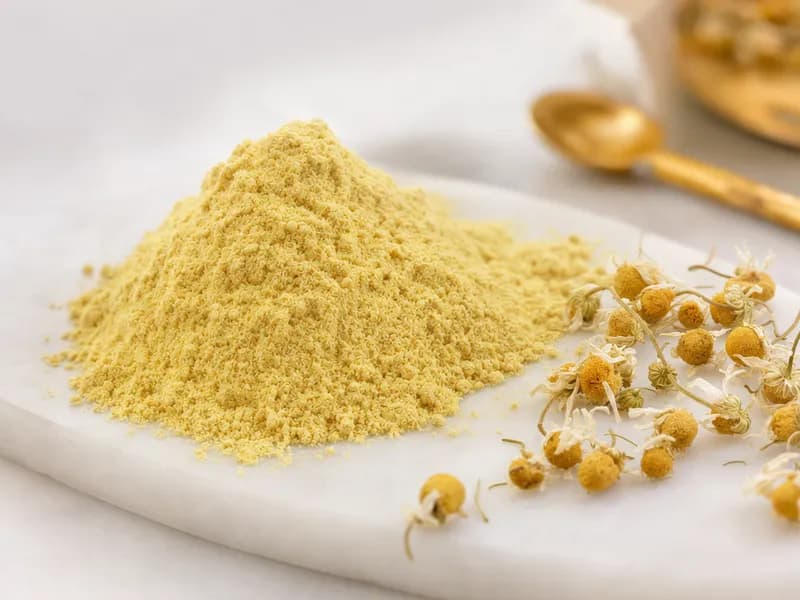
Apigenin is a plant flavonoid with a deep preclinical literature on GABA-A receptor binding, anxiolytic effects, and aromatase inhibition. Humans have consumed apigenin for centuries in chamomile tea; what's new is the isolated 50 mg dose that's become the standard sleep-stack component since Andrew Huberman popularized it on his podcast around 2022.
The honest evidence picture: chamomile (a major apigenin source) has reasonable human RCT evidence for sleep and anxiety. Isolated apigenin at the 50 mg sleep-stack dose has weaker direct human trial data. Most of the mechanism work is preclinical or based on chamomile-extract studies. That doesn't mean the dose is unsupported, but brands should know they're standing on a smaller evidence base than for the well-trodden actives like magnesium or melatonin.
Where apigenin fits commercially is in premium sleep stacks paired with magnesium glycinate, L-theanine, glycine, and sometimes a low-dose melatonin. The Huberman-era sleep formulation pattern (magnesium + apigenin + theanine) has become standard enough that consumers now ask for it by name. The aromatase-inhibition angle (lower estrogen, raise testosterone) is a parallel interest in men's-wellness products, though the human evidence for that positioning is even thinner.
Magnesium + L-theanine + glycine + apigenin has become the standard premium sleep formulation. Consumer awareness is built; you don't need to educate the buyer.
GABA-A binding, anxiolytic activity, and aromatase modulation give apigenin a multi-pathway story that resonates with educated consumers.
Adding apigenin lets a sleep brand position above the magnesium-and-melatonin baseline without dramatic cost increases.
50 mg of standardized apigenin, taken 30 to 60 minutes before bedtime.
The published minimums and typical costs for Apigenin. Every project gets an itemized quote covering your format, ingredients, and packaging.
| Dosage form | Minimum order |
|---|---|
| Apigenin capsules | from 2,000 units |
| Apigenin tablets | from 2,000 units |
6 to 10 weeks from the catalog (network range 4 to 12 weeks). A custom formula takes 8 to 12 weeks before production.
2,000 units usually lands at USD $8,000 to $15,000 all-in, depending on format, ingredient grade, and packaging.
GMP-certified manufacturing, a third-party ISO 17025 Certificate of Analysis on every batch, regulatory handling, and one account lead.
Formula feasibility reviews are free. Get an itemized quote for your format and volume.
Apigenin (and chamomile-sourced apigenin) is recognized for natural health product use. Chamomile has an established NPN monograph; isolated apigenin may require a different submission pathway depending on source and standardization. Confirm specifics with regulatory counsel.
Sold as a dietary ingredient under DSHEA, most commonly as a chamomile extract or isolated form. Structure-function claims around sleep and relaxation are common; avoid sleep-disorder treatment language.
Claim language must be reviewed for your specific product and market before use. Not all claims are permitted in every jurisdiction.
Selected peer-reviewed studies, plus the demand signals we're seeing from brands, retailers, and consumer search behaviour.
Salehi B, Venditti A, Sharifi-Rad M, et al. · International Journal of Molecular Sciences · 2019
Comprehensive review of apigenin pharmacology and mechanism. The standard reference document for technical and regulatory submissions.
Avallone R, Zanoli P, Puia G, et al. · Biochemical Pharmacology · 2000
Established apigenin's GABA-A receptor binding and anxiolytic activity in preclinical models. The mechanism citation behind the sleep-stack positioning.
Srivastava JK, Shankar E, Gupta S. · Molecular Medicine Reports · 2010
Review of chamomile (apigenin's primary dietary source) clinical evidence in sleep and anxiety. Useful for substantiating chamomile-extract claims.
Amsterdam JD, Li Y, Soeller I, et al. · Journal of Clinical Psychopharmacology · 2009
Chamomile extract (standardized to 1.2% apigenin) reduced anxiety symptoms in generalized anxiety disorder over 8 weeks. The strongest human RCT for chamomile-sourced apigenin.
Apigenin search interest grew over 10× from 2021 to 2024, almost entirely driven by Huberman Lab content and follow-on TikTok sleep-stack videos.
Apigenin is a clear example of single-voice supplement-trend creation. Before Andrew Huberman started recommending 50 mg apigenin as part of his "sleep cocktail," almost no consumer had heard of the isolated active. By 2024, it was a standard component in premium sleep stacks from Momentous, Athletic Greens-adjacent brands, and a long list of DTC sleep startups. The risk is that the demand is narrow (concentrated among biohacker-curious consumers) and could fade if the originating voice moves on. The opportunity is that the formulation pattern is now established enough to outlast the source.
References are provided for educational purposes. Citations do not constitute medical claims or guarantee outcomes. Structure-function claim language must be reviewed for your specific product and market.
For Apigenin the floors are capsules from 2,000 units, tablets from 2,000 units. These are entry minimums. The same formula scales past 100,000 units as it sells.
A white-label or private-label Apigenin product from our 800+ formula catalog typically runs 6 to 10 weeks, and 4 to 12 weeks across the full network depending on which facility takes the run. A custom Apigenin formula takes 8 to 12 weeks to reach a production-ready formulation, then production on top.
A first run of 2,000 units is usually USD $8,000 to $15,000 all-in, depending on format, ingredient grade, and packaging. That covers formulation work, regulatory, packaging, quality testing, and the production run itself. Coordinated through us a project typically lands 20 to 40% below managing the same production in-house. You get an itemized quote before committing.
Canada: Apigenin (and chamomile-sourced apigenin) is recognized for natural health product use. Chamomile has an established NPN monograph; isolated apigenin may require a different submission pathway depending on source and standardization. Confirm specifics with regulatory counsel. United States: Sold as a dietary ingredient under DSHEA, most commonly as a chamomile extract or isolated form. Structure-function claims around sleep and relaxation are common; avoid sleep-disorder treatment language. We prepare and file the NPN application for Canada and handle FDA facility registration and DSHEA label review for the US, including bilingual labels for dual-market SKUs.
50 mg of standardized apigenin, taken 30 to 60 minutes before bedtime. We formulate to the dose your claims need and confirm it against the monograph or claim path for your market before the run.
Isolated apigenin costs more but allows tighter dose control. Chamomile extract standardized to apigenin content is the cheaper route and carries most of the human evidence. Which you choose affects both your cost and what you can defensibly claim.
Capsules dominate, for good reason. Apigenin is poorly water-soluble and bitter, so gummies and powders need careful masking and may force a dose compromise to stay palatable.
Conservative ones. Human RCT evidence at the 50 mg isolated-apigenin dose is limited, and most efficacy claims lean on chamomile-extract studies and preclinical mechanism work. Aromatase inhibition is real preclinically, but the human magnitude at supplement doses is uncertain, so implied testosterone-modulation claims should be avoided outright.
Magnesium glycinate, L-theanine, and glycine make up the standard premium sleep stack. Avoid co-formulating with stimulants, which defeats the positioning. The typical dose is 50 mg, 30 to 60 minutes before bed.
Tell us about your product concept and we'll put together a formulation, sourcing, and manufacturing plan tailored to your brand, format, and market.