11 min read
The GLP-1 Off-Ramp: Opportunity for Supplement Founders
When consumers stop GLP-1 drugs like Ozempic, rapid weight regain creates a supplement opening. Here's how brand founders can position for the GLP-1 off-ramp.
The first-milking dairy ingredient behind 2024's most viral supplement launch.
Bovine colostrum is the first milk produced by cows after calving, dense in immunoglobulins, growth factors, and bioactive peptides. The TikTok-driven launch of Armra brought it from athletic supplementation niche into mainstream wellness almost overnight.
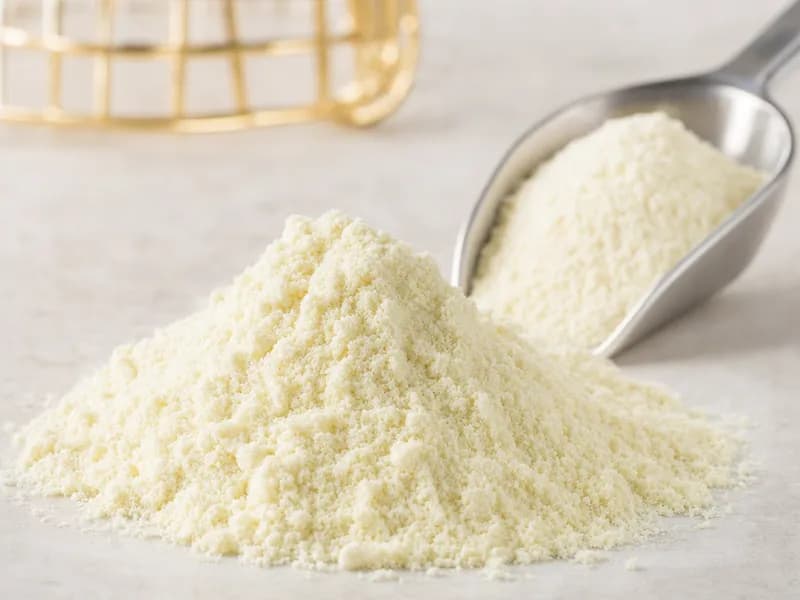
Bovine colostrum is collected from cows in the first 24 to 48 hours after calving. It's a fundamentally different fluid from regular milk. High in IgG immunoglobulins, lactoferrin, growth factors like IGF-1 and TGF-β, and bioactive peptides. The supplement category has existed for decades in athletic and gut-health niches; what changed in 2023 to 2024 was Armra's brand-led repositioning as a beauty, immunity, and gut-health daily wellness product. That viral moment pulled a wave of new entrants into the category.
The clinical file is most developed in two areas: gut-barrier integrity (with multiple RCTs showing reductions in exercise-induced intestinal permeability) and exercise-recovery immunity in athletes. The broader claims that the consumer market is excited about (skin, hair, daily immune function) have weaker direct evidence but reasonable mechanistic plausibility. Brands entering this category should be honest with themselves about which claims are well-substantiated and which are extrapolated.
The sourcing decisions matter more than they do for most ingredients. Look for low-heat (≤70°C) processing to preserve immunoglobulin content, IgG-standardized lots (≥20% IgG), and traceable dairy supply with documented colostrum-only collection (not transitional milk). The price difference between premium and commodity colostrum is meaningful (premium runs $80 to $150/kg, commodity can be under $40) and the gap shows up in IgG content and biological activity. Don't buy on price.
Armra's viral moment created a category where there wasn't one. Consumer awareness has run ahead of product availability. Favorable conditions for new launches.
Gut, immune, skin, hair, recovery. Colostrum lets you build a product line around one hero ingredient rather than chasing trends across multiple actives.
Armra's $80+ monthly subscription proved consumers will pay premium prices in this category. Margin economics support a strong brand-building strategy.
1,000 to 3,000 mg/day of IgG-standardized colostrum powder. Single 3 g serving or 1 g three times daily.
The published minimums and typical costs for Bovine Colostrum. Every project gets an itemized quote covering your format, ingredients, and packaging.
| Dosage form | Minimum order |
|---|---|
| Bovine Colostrum powders | from 1,000 units |
| Bovine Colostrum capsules | from 2,000 units |
| Bovine Colostrum chewable tablets | from 2,000 units |
6 to 10 weeks from the catalog (network range 4 to 12 weeks). A custom formula takes 8 to 12 weeks before production.
2,000 units usually lands at USD $8,000 to $15,000 all-in, depending on format, ingredient grade, and packaging.
GMP-certified manufacturing, a third-party ISO 17025 Certificate of Analysis on every batch, regulatory handling, and one account lead.
Formula feasibility reviews are free. Get an itemized quote for your format and volume.
Bovine colostrum is listed in the NHPID for natural health product use. Specific claim language depends on the monograph and standardization. NPN review path is established but quality documentation requirements are stringent.
Sold as a dietary ingredient under DSHEA. Some structure-function claims around immune and gut support are common; recovery and skin claims have less direct substantiation and should be drafted carefully.
Claim language must be reviewed for your specific product and market before use. Not all claims are permitted in every jurisdiction.
Selected peer-reviewed studies, plus the demand signals we're seeing from brands, retailers, and consumer search behaviour.
Davison G. · Sports Medicine · 2021
Comprehensive review of athletic supplementation outcomes. The reference document for exercise-recovery claim substantiation.
Crooks CV, Wall CR, Cross ML, Rutherfurd-Markwick KJ. · International Journal of Sport Nutrition and Exercise Metabolism · 2006
Bovine colostrum supplementation enhanced salivary IgA and immune markers in distance runners. Foundational for athletic-immunity positioning.
Hałasa M, Maciejewska D, Baśkiewicz-Hałasa M, et al. · Nutrients · 2017
Reduced exercise-induced intestinal permeability ("leaky gut") in athletes. The citation behind most gut-barrier claim language.
Mehra R, Singh R, Nayan V, et al. · Foods · 2022
Recent comprehensive review covering composition, processing impacts, and clinical evidence. Useful technical reference for sourcing and standardization decisions.
Bovine colostrum search interest grew over 400% from 2022 to 2024, driven almost entirely by Armra's launch and follow-on TikTok content.
Bovine colostrum is the most dramatic supplement-category creation story of the last five years. Before 2023, it was a niche sports nutrition ingredient sold mostly through bodybuilding channels. Armra, founded by a Harvard-trained physician, launched with a strong scientific narrative and DTC marketing playbook, and the category exploded. As of mid-2025, dozens of brands have launched colostrum products, and major retailers have begun carving out shelf space. The window for differentiated entry is closing but not closed. Quality, sourcing transparency, and product-format differentiation (stick packs, chewables, infused beverages) are where the next wave of winners will emerge.
References are provided for educational purposes. Citations do not constitute medical claims or guarantee outcomes. Structure-function claim language must be reviewed for your specific product and market.
For Bovine Colostrum the floors are powders from 1,000 units, capsules from 2,000 units, chewable tablets from 2,000 units. These are entry minimums. The same formula scales past 100,000 units as it sells.
A white-label or private-label Bovine Colostrum product from our 800+ formula catalog typically runs 6 to 10 weeks, and 4 to 12 weeks across the full network depending on which facility takes the run. A custom Bovine Colostrum formula takes 8 to 12 weeks to reach a production-ready formulation, then production on top.
A first run of 2,000 units is usually USD $8,000 to $15,000 all-in, depending on format, ingredient grade, and packaging. That covers formulation work, regulatory, packaging, quality testing, and the production run itself. Coordinated through us a project typically lands 20 to 40% below managing the same production in-house. You get an itemized quote before committing.
Canada: Bovine colostrum is listed in the NHPID for natural health product use. Specific claim language depends on the monograph and standardization. NPN review path is established but quality documentation requirements are stringent. United States: Sold as a dietary ingredient under DSHEA. Some structure-function claims around immune and gut support are common; recovery and skin claims have less direct substantiation and should be drafted carefully. We prepare and file the NPN application for Canada and handle FDA facility registration and DSHEA label review for the US, including bilingual labels for dual-market SKUs.
1,000 to 3,000 mg/day of IgG-standardized colostrum powder. Single 3 g serving or 1 g three times daily. We formulate to the dose your claims need and confirm it against the monograph or claim path for your market before the run.
At least 20% IgG, with low-heat processing. Processing method matters as much as the number: high-heat drying reduces immunoglobulin activity, so a product can hit a paper specification and still be functionally weaker than it looks.
Powder is the more natural fit. The standard 1 to 3 g daily dose mixes into water, smoothies, or coffee, which is how most consumers actually take colostrum. Capsules work but need a larger count to match the powder dose, and 500 mg capsule doses have weaker clinical support.
Bovine colostrum contains dairy and must be labeled accordingly. It is not suitable for vegan or dairy-allergic consumers, and lactose-reduced specifications are worth considering for sensitive customers at higher doses.
Directly and conservatively. The hormonal and growth-factor content is a frequent consumer question. Existing evidence does not suggest oral IGF-1 from colostrum meaningfully reaches systemic circulation, but conservative label language is the right posture. Sourcing questions are also rising, and calf-first collection protocols matter to a premium audience.
Tell us about your product concept and we'll put together a formulation, sourcing, and manufacturing plan tailored to your brand, format, and market.