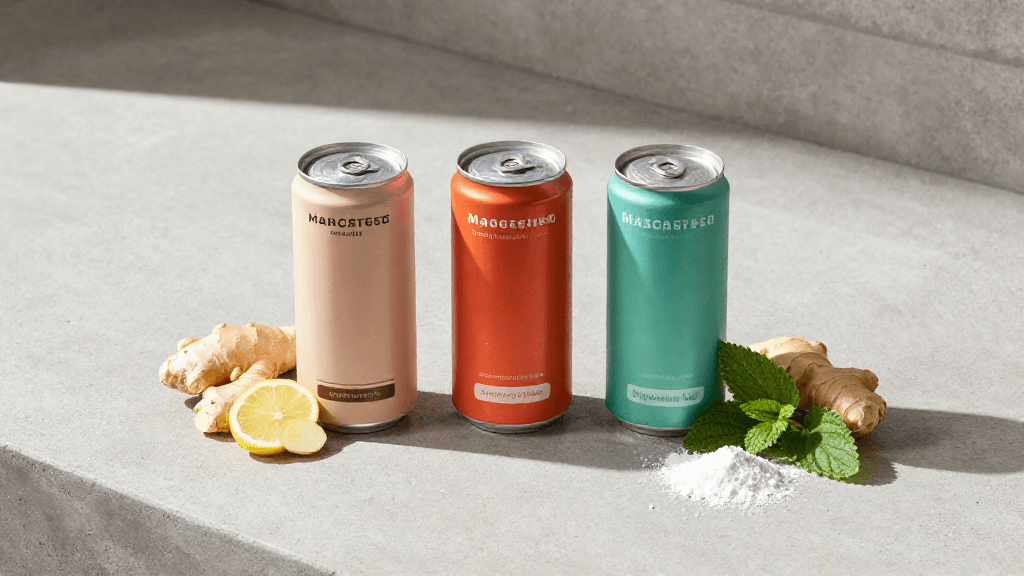
A functional beverage starts with two decisions: the moment in the day the drink is for, and the format it comes in. The moment, or need-state (winding down, gut comfort, afternoon focus), decides the ingredients. The format decides the regulations. In Canada a ready-to-drink beverage is normally regulated as a food or a supplemented food, whatever it claims, while a small single-dose shot or a powder can be licensed as a natural health product. In the US a drink presented as a beverage is a conventional food, not a dietary supplement. Settle both before you write the formula, because they limit which ingredients and claims you can use.
What is a need-state?
A need-state is a specific moment in someone's day that a product is built for. Euromonitor's report on need states in functional beverages frames the category this way: shoppers look for a drink that fixes a moment, such as the afternoon slump or a restless evening, more than for a list of ingredients.
The difference shows up in the brief. An ingredient-led drink reads like a supplement panel poured into a can. A need-state drink answers a question the shopper already has, such as "what do I drink at 2 PM that isn't a third coffee?" If you can't say in one sentence which moment your drink is for, the shopper won't be able to either.
Who is buying functional drinks?
Functional drinks are popular across age groups, especially among millennials and Gen Z, and the need-states brands build for most often are sleep and winding down, gut comfort, calm and focus. For a first launch, build one SKU around one of them. A focus drink that also claims to help you sleep confuses the shopper and is hard to support with evidence.
Which format should you choose?
The format sets the regulatory route, and the route sets the ingredient list.
In Canada, Health Canada's classification guidance treats format as a primary factor:
- Ready-to-drink beverages sold alongside soft drinks and juices are normally regarded as foods, regardless of any health claim. A drink with added vitamins, minerals, amino acids or caffeine is a supplemented food, which needs a Supplemented Food Facts table and, where cautions apply, the caution identifier. Its added ingredients must be on Health Canada's list of permitted supplemental ingredients, within their limits, or otherwise accepted for food use.
- Liquids in a single dose of 90 mL or less, or shots between 90 and 125 mL, can be classified as natural health products. They need a product licence and an NPN, and can use ingredients and claims from Health Canada's monographs.
- A powdered drink mix can be sold as a supplemented food under the Food and Drug Regulations, with a Supplemented Food Facts table, or as a natural health product with an NPN.
In the US, the FDA's guidance on liquid dietary supplements and beverages looks at how a product is presented: its name, packaging, serving size and whether it is sold as a drink. A product presented as a beverage is a conventional food, so its ingredients must be approved food additives or generally recognized as safe for that use. Dietary supplement rules, including the structure/function disclaimer, apply only to products that are actually supplements, such as shots and drops in supplement formats.
So a drink built around a botanical such as ashwagandha usually has to be a shot or a powder rather than a can, at least in Canada. Our liquids and powders pages cover what each format can hold.
How do you turn a need-state into a formula?
Once you know the moment and the route, pick a short list of ingredients with human data at a dose that fits one serving. Common pairings, for products where the route allows them:
- Winding down: L-theanine, magnesium and botanicals with human trials.
- Gut comfort: ginger, prebiotic fibres such as partially hydrolyzed guar gum or inulin at doses people tolerate, and probiotic strains whose counts hold up in stability testing.
- Focus: L-theanine with a moderate dose of caffeine. One controlled trial found 100 mg of L-theanine with 50 mg of caffeine improved attention-switching accuracy compared with placebo.
Keep each formula to one moment. A wind-down drink with caffeine isn't a wind-down drink, and a focus drink with three sedating botanicals isn't a focus drink. Leave out proprietary blends with no disclosed amounts.
Check every ingredient against the route before you go further. Health Canada's notes on ingredients in foods recognize L-theanine as a food ingredient only at up to 23 mg a day, and do not accept ashwagandha root extract in foods at all, so a 100 mg L-theanine drink or an ashwagandha drink needs the shot or natural health product route in Canada. Browse our ingredient library for the forms and doses we work with.
Where does need-state messaging cross the line?
Need-state positioning works because it promises a specific outcome, and the same specificity gets a product into trouble when it turns into a disease claim.
- Avoid disease language in both countries: "treats," "cures," "prevents," "reduces anxiety," "lowers blood pressure." On a food or a US supplement, those claims make the product an unapproved drug.
- In the US, a supplement can say "supports relaxation" or "supports mental focus" with the FDA disclaimer. A conventional-food beverage is held to a narrower standard: FDA's position is that a structure/function claim on a food has to come from its nutritive value.
- In Canada, a licensed natural health product carries the claims in its licence, and following a monograph gives you a set of accepted claims (see Health Canada's compendial monographs). A supplemented food has a much shorter list of permitted claims.
Then anchor each claim to an ingredient at a dose its studies used. The mismatch we flag most often is a formula with a small amount of an ingredient and copy written as if it held the studied dose. A trial of ashwagandha root extract, for example, used 250 and 600 mg a day. A drink with 100 mg can't borrow those results.
Start with a two-page brief
The most common problem in need-state launches is the brief. Founders arrive with a mood board, a flavour idea and a list of trending ingredients, but without a one-sentence statement of the moment the drink is for and who it is for. Without that sentence, the formulator, the label designer and the retail buyer are all guessing.
For a beverage client, our first deliverable is a two-page brief:
- The need-state, in one sentence.
- The target consumer, specific enough to describe one real person.
- The format and the regulatory route in each market.
- Three to five key ingredients, with the reason for each and the dose.
- Claim language checked against the route.
- Flavour direction, serving size and packaging.
That brief takes weeks out of formulation and labelling.
What should you check before scoping a beverage launch?
- One need-state per SKU.
- A format chosen for the route you want in each market, before the formula.
- Ingredients permitted on that route, at a dose that fits one serving.
- Claims tested against the rules for that route before any label is printed.
- For Canada, a bilingual label from the start, with the Supplemented Food Facts table or the natural health product label your route needs.
Our NPN application service covers licensed shots and powders, and our private and white label service covers formulas that are ready to brand.
FAQ
What is the difference between a functional beverage and a need-state beverage?
A functional beverage adds an ingredient with a benefit, such as a vitamin, a probiotic or an adaptogen. A need-state beverage is built around a specific moment in the day and chooses its ingredients for that moment, which makes it easier for a shopper to pick at the cooler.
Do I need an NPN to sell a functional drink in Canada?
It depends on the format. Ready-to-drink beverages are normally foods or supplemented foods, which have their own labelling rules and permitted ingredients and don't use an NPN. Single-dose liquids of 90 mL or less, shots up to 125 mL, and powders sold as natural health products need a product licence and an NPN.
Can one drink target more than one need-state?
In practice, no. A wind-down formula with caffeine doesn't read as a wind-down drink to a shopper or a buyer, and overlapping mechanisms make claims harder to support. Make one product per moment.
How long does a functional drink launch take?
It depends on the route. If the product needs an NPN, the application comes first: Health Canada's service standard is 60 days for a monograph-based Class I application and longer for others. Production takes 4 to 12 weeks*, and custom formulation, novel ingredients or stability work for a new package add to that. A clear brief at the start saves the most time.
*Lead times depend on which facility in our network runs your product.
What ingredient doses should I plan for?
The dose the clinical studies used for the effect you want to claim, adjusted to the serving you can fit. If the studied dose doesn't fit a can, a shot or a scoop, change the ingredient or change the format.
If you are working on a brief and want a second opinion on the need-state, the format or the claims, send it over and we will come back with notes.