A creatine product people keep taking uses creatine monohydrate at 3 to 5 g a day, leaves out the loading phase, splits any larger daily amount into two servings, comes in a format that fits a full dose, and makes only the claims its market allows. In Canada that last point is narrow. Health Canada's creatine monograph authorizes two claims, both about muscle size and high-intensity performance, at up to 5 g a day outside a loading phase. Cognitive, sleep or recovery claims need a longer application with their own evidence.
This post covers the formulation side: dose, tolerability, format and claims. For the wider story of creatine beyond the gym, see our post on creatine as a conditionally essential nutrient.
What dose works without a loading phase?
The International Society of Sports Nutrition's position stand on creatine puts the usual maintenance dose at 3 to 5 g a day, with larger athletes sometimes taking 5 to 10 g. A loading phase of about 20 g a day (four 5 g doses) for five to seven days fills muscle stores quickly.
Loading is optional. In a classic study of muscle creatine loading, 3 g a day for 28 days raised muscle creatine to the same level as a loading phase did, only more slowly. The trade-off is timing: performance effects show up sooner with loading, and the position stand notes the low-dose route has less evidence for early benefits.
For a new product, the simplest instruction is one serving of 3 to 5 g a day, every day, and a note that it takes about four weeks to build up. Health Canada's monograph uses the same idea for its no-loading option: 3 to 5 g a day, for a minimum of four weeks.
How do you keep creatine from upsetting the stomach?
Dose size matters most. In a double-blind trial in 59 soccer players, a single 10 g dose taken daily for 28 days caused diarrhea in 55.6% of players. Two 5 g doses caused it in 28.6%, close to the 35.0% seen on placebo.
So if a product is positioned at more than 5 g a day, split it into two servings spaced through the day. Creatine monohydrate also dissolves slowly in cold liquid, so tell users to mix each serving into a full glass and take it with food if their stomach is sensitive.
Higher doses have another limit in Canada: the monograph's maintenance range tops out at 5 g a day, so an 8 to 10 g daily product needs an application outside the monograph there.
Which format fits a full dose?
The format has to hold the dose comfortably and keep the creatine stable.
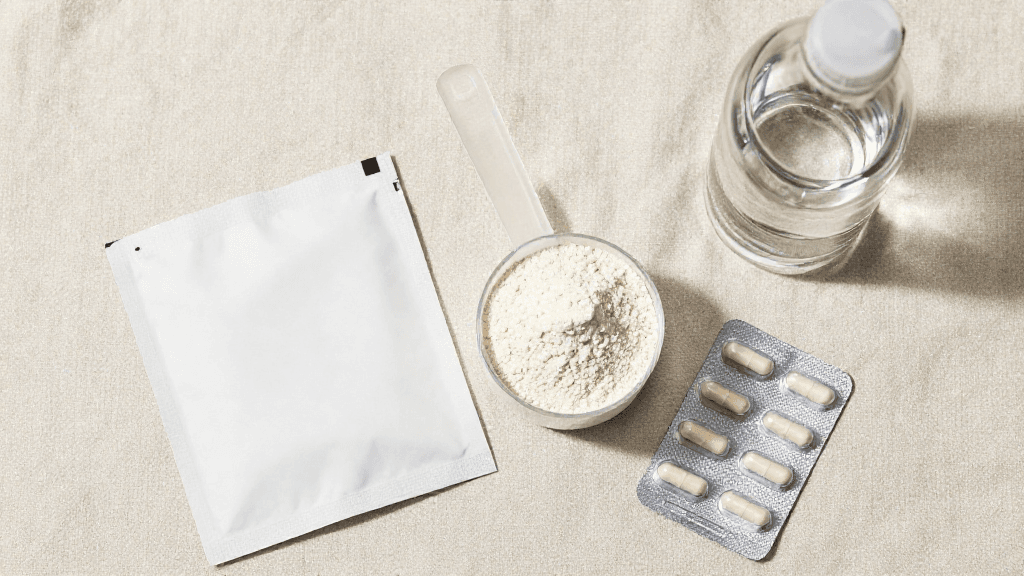
- Powder in a tub or stick packs is the default. It fits any dose, costs the least per serving and is easy to split.
- Capsules are convenient but take several large capsules to reach 3 to 5 g, which many people won't keep up. They suit lower-dose combination products in the US. In Canada, the monograph minimum without loading is 3 g a day.
- Gummies are popular but hard to make at a full dose with a stable label claim, so test potency over the whole shelf life before you commit.
- Liquids and ready-to-drink formats break creatine down over time. Health Canada's monograph excludes liquids and solutions for that reason, along with food-like dosage forms.
Monohydrate also remains the form with the most evidence. The position stand finds no advantage for the newer forms, and Canada's monograph covers monohydrate only. Our creatine monohydrate page covers sourcing and specifications.
What claims can a creatine product make?
In Canada, a creatine product needs a product licence and NPN. A compendial application against Health Canada's creatine monohydrate monograph is the fastest route. The monograph allows:
- For adults 18 and older, creatine monohydrate only, taken orally.
- Doses: a loading phase of 15 to 20 g a day for five to seven days followed by 2 to 5 g a day, or 3 to 5 g a day with no loading.
- Two claims: "Increases body/(lean) muscle mass/size when used in conjunction with a resistance training regimen" and "Improves strength/power/performance in repetitive bouts of brief, highly-intense physical activity (e.g. sprints, jumping, resistance training)".
- Three cautions on the label: you may gain weight, ask a health care practitioner before use if pregnant or breastfeeding, and ask before use if you have a kidney disorder.
Cognitive, sleep and recovery claims are not in the monograph, so they need a non-compendial application backed by evidence. The same goes for doses outside the monograph, and combining creatine with other actives also takes the product beyond a single-monograph application. Our NPN application service handles both routes.
In the US, creatine is sold as a dietary supplement with structure/function claims such as "supports muscle strength," the FDA disclaimer, and a notice to the FDA within 30 days of first marketing the claim. A 2018 systematic review of six randomized trials found that creatine may improve short-term memory and reasoning in healthy people, with no change in young adults and results on other cognitive measures that conflicted. That supports a careful memory claim at most. The evidence on sleep is thin, so leave sleep claims out. Claims about cognitive decline, dementia or sleep disorders are disease claims.
Does a product for women need a different formula?
The active stays the same. The dose can follow body weight, since the position stand gives doses per kilogram, so a 3 g serving suits a smaller user and 5 g suits a larger one. Most creatine research has been done in men, which is a reason to keep claims to what the studies support. Format and flavour often matter more to this audience than the formula itself.
A checklist before you sign off
- Creatine monohydrate at 3 to 5 g a day, with no loading phase in the directions.
- Any daily amount above 5 g split into two servings, and only where the market allows it.
- A format that holds a full dose and stays at label claim through shelf life.
- Directions that say to mix each serving into a full glass of liquid.
- Claims inside the monograph in Canada, or structure/function claims with the disclaimer in the US.
- The three Canadian cautions on the label, in English and French. Our label compliance work covers both markets.
FAQ
What is the recommended daily dose of creatine monohydrate?
3 to 5 g a day is the usual maintenance dose, and Health Canada's monograph uses 3 to 5 g a day for products without a loading phase. Larger athletes sometimes take more, split across the day.
Do consumers need a loading phase?
No. Taking 3 g a day reaches the same muscle creatine level in about four weeks as loading does in one. Loading brings the effect forward, so it is a choice about speed, not results.
Why does creatine upset some people's stomachs?
Large single doses are the main cause. In one trial, one 10 g dose a day caused diarrhea in more than half the players, while two 5 g doses caused it about as often as placebo. Splitting the dose and mixing each serving into a full glass helps.
Can a creatine product claim cognitive or sleep benefits?
Not under Health Canada's monograph, which allows only the muscle size and high-intensity performance claims. Other claims need a non-compendial application with evidence. In the US, the memory research supports a carefully worded structure/function claim at most, sleep claims have little evidence, and disease claims are not allowed.
Can creatine be sold as a gummy or a drink?
In the US, yes, if the product holds its label claim through shelf life, which is hard for both formats. In Canada, the creatine monograph excludes liquids and food-like dosage forms, so those formats need a different route.
Is a creatine product eligible for an NPN in Canada?
Yes. A creatine monohydrate product that follows the monograph's dose, claims and cautions qualifies for a compendial application, the fastest route. See our private and white label service for the production side.
If you are working on a creatine product and want a second opinion on the dose, the format or the claims, get in touch.